Should a Cedar Fence Touch the Ground? A Guide for Oklahoma City Homeowners
Should a Cedar Fence Touch the Ground?
What that gap at the bottom is actually for — and how your yard, your slope, and your dog change the answer.
You get a new privacy fence, step back to admire it, and notice daylight underneath the boards. If you have a dog, your first thought might be, "Could he get out?" It's a fair question — and the answer depends on more than you'd think.
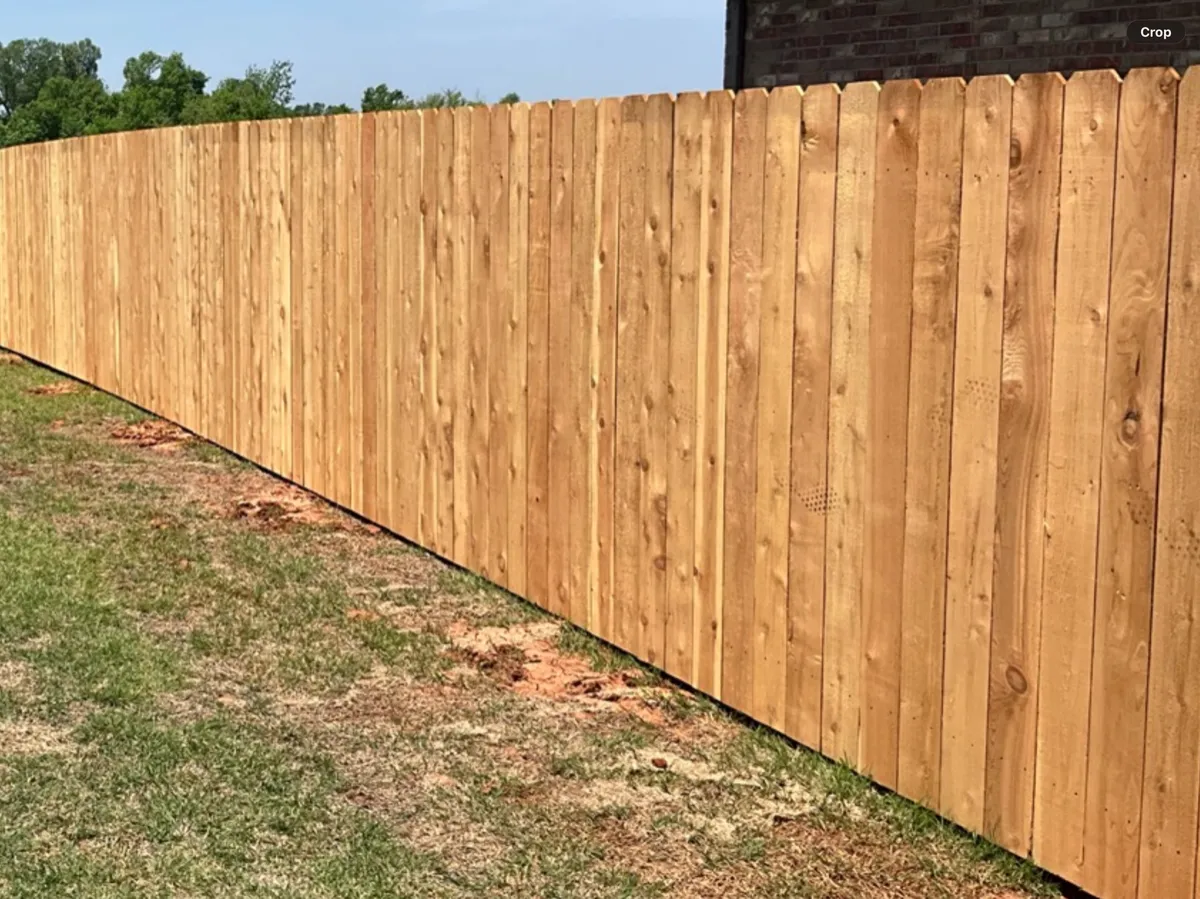
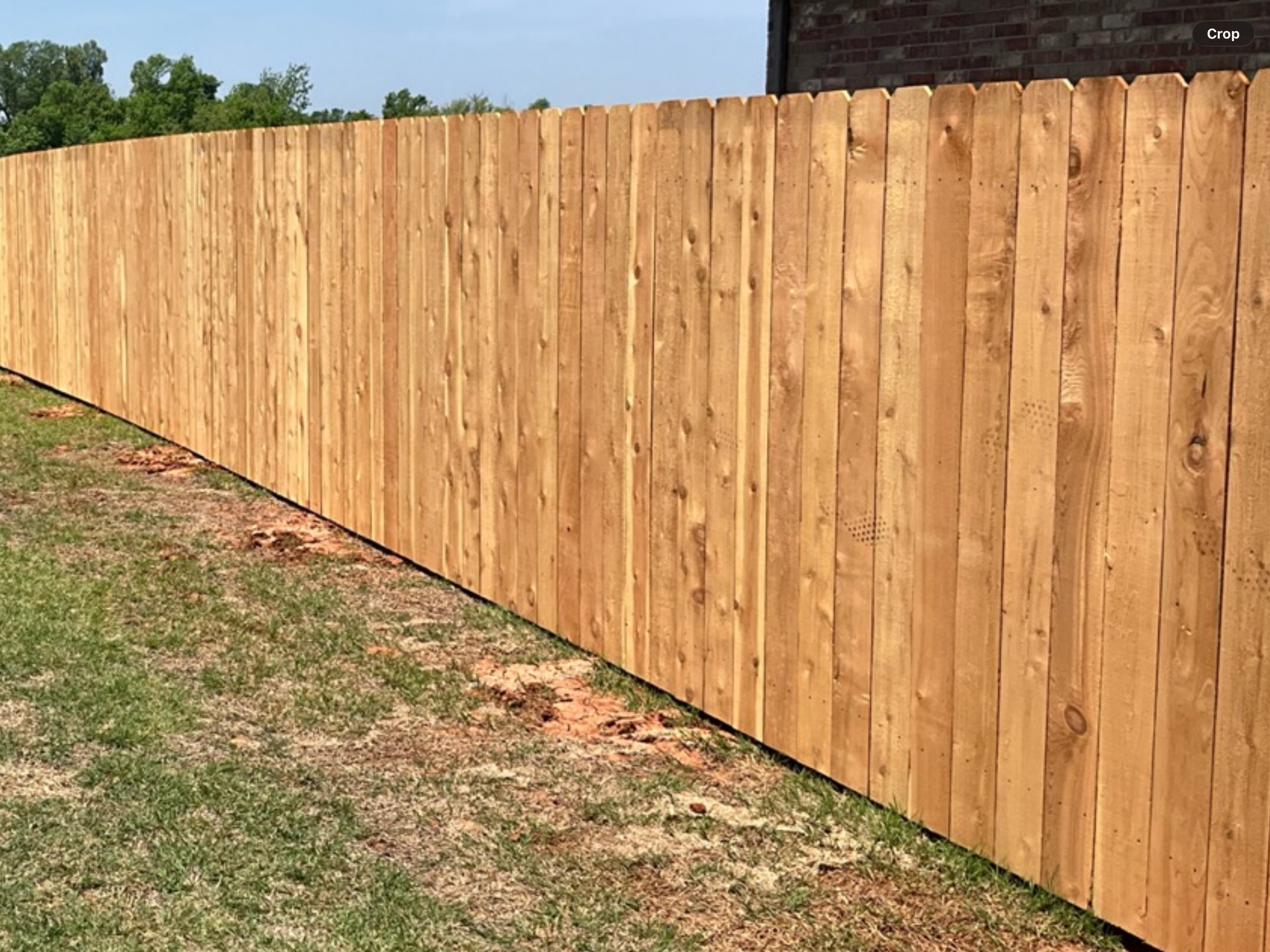
In most yards, cedar pickets should be kept off the ground. But how much space belongs under the fence should be planned around your yard, your drainage, and how you intend to use the fence.
Why leave a gap under a wood fence?
The bottom of a fence gets wet more often than most people realize. Rain splashes dirt onto the boards. Sprinklers hit them. Grass and mulch hold moisture against them. If the pickets sit directly in soil, they have a much harder time drying out.
Cedar holds up well outdoors, but it's still wood. Keeping the boards above the soil helps protect their bottom edges from prolonged moisture and decay. It also makes trimming along the fence easier — a string trimmer can still damage wood, but you don't want every picket buried in grass.
The goal isn't to leave a huge opening. It's to give the wood some breathing room while building a fence that works for the homeowner.
How much space should be under the fence?
There isn't one measurement that works for every Oklahoma City yard. On fairly even ground, a modest, consistent gap often looks clean and gives the boards clearance from the soil. On uneven ground, that gap can change from one spot to the next.
THE REAL QUESTION
If the fence is mostly for privacy, a little daylight at the bottom may be no concern. If you have a small dog, the gap deserves more attention. If water regularly runs across that part of the yard, closing it tightly could create a drainage problem.
What if my yard slopes?
Slopes are where this question gets interesting. Imagine a fence section that stays perfectly level while the ground drops several inches beneath it — one end may have a small gap, while the other has an opening big enough for a dog to investigate.
Depending on the design, the fence may follow the grade more closely, or step down in sections. Each approach creates a different look along the top and bottom of the fence. Neither choice should be a surprise after the fence goes up — if there's a steep spot, a drainage swale, or a low area where your dog likes to patrol, point it out during the estimate.
Can you close the gap for a dog?
Yes, but the best solution depends on the dog and the yard. A gap that wouldn't matter for a Labrador might be a clear exit for a tiny dog. A dog that digs needs a different solution than one that simply squeezes through an opening.
We can discuss ways to bring the fence closer to the grade or address a problem area separately — while still planning for containment without burying cedar pickets in soil and accounting for water that naturally moves through the yard.
HELPFUL TO KNOW
If keeping a pet in is your main reason for building a fence, tell us the dog's size and whether it digs. That information is every bit as useful as the fence height.
What about a gap under the gate?
Gates need special attention because they swing over the ground. A gate that barely clears the dirt when installed may drag when the ground is wet, grass grows, or the surface beneath it changes. A sloped driveway or yard can make that clearance more noticeable.
Before choosing gate placement and swing direction, we look at the path the gate has to travel — not just how it looks when closed. If a pet could fit under the gate, bring that up before installation.
Can I just add dirt or mulch to fill the gap?
Be careful with that approach. Piling soil or mulch against the pickets removes the clearance that was left to help the wood dry. It may also redirect water or wash away in the next heavy rain.
If the ground has eroded beneath an existing fence, it's better to find out why before filling the space. A small low spot may be straightforward to address — a drainage path needs more thought.
The bottom line for Oklahoma City homeowners
A visible gap under a cedar fence is not automatically a mistake. Keeping wood pickets out of the dirt is usually a good thing. But the gap should make sense for your yard and your reason for buying the fence.
At Legacy Fence & Construction, we want to know what matters to you before we lay out the fence. Is it privacy? Keeping a dog in? Working around a slope? Giving water a place to go? Those answers help us build the fence to fit the property instead of treating every yard like it's perfectly flat.
Planning a fence in the OKC metro?
Tell us about the tricky spots during your estimate — we'll walk the line with you and talk through how the fence will meet the ground.
"Customer Satisfaction Is Our Legacy" · Serving Edmond, Yukon & the Oklahoma City Metro